
The Hybrid Frontier: How the ‘Man + AI’ Model Can Democratize Global Finance
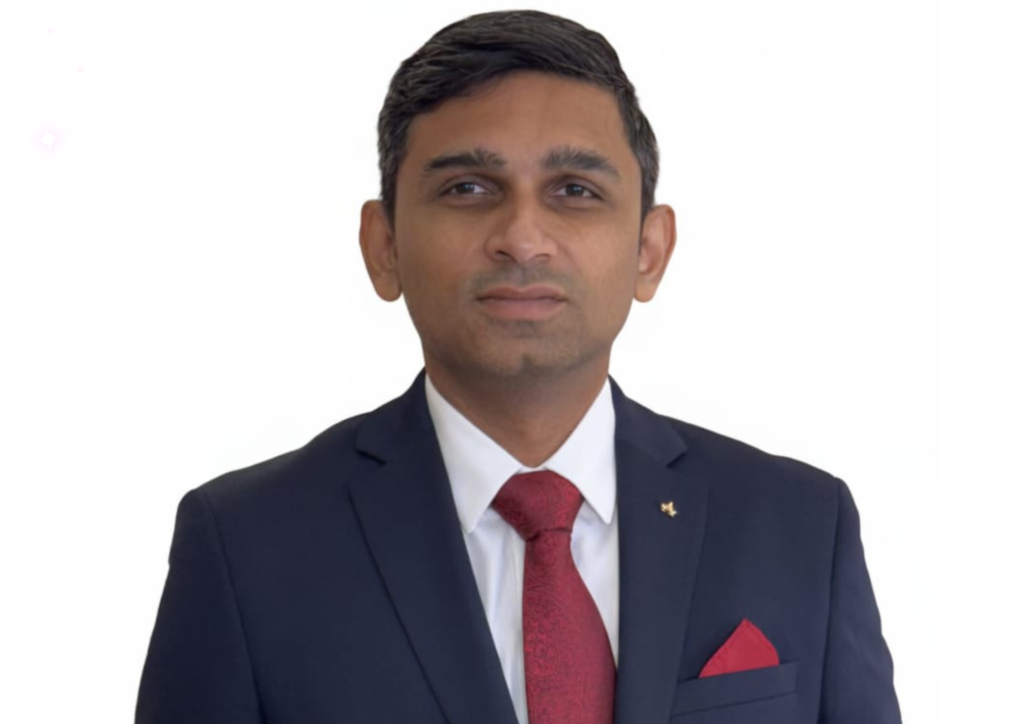
The global financial ecosystem is undergoing a fundamental transformation. As Vignesh Kumaran Subramaniam, Head of Products at KFin Technologies Ltd, observes, markets such as India are witnessing an unprecedented rise in retail participation, driven by smartphone penetration, affordable data, and increasing financial awareness. Millions of first-time investors are entering capital markets, reshaping the scale and complexity of financial services. However, while access has expanded, the availability of personalised, high-quality financial guidance remains limited.
For years, the financial industry has oscillated between two models. On one end lies robo-advisory—efficient, low-cost, and scalable, yet often impersonal. On the other is the traditional advisory model, which offers trust and empathy but struggles to scale sustainably. As wealth-tech evolves, neither extreme is sufficient on its own. The future of financial inclusion lies in a hybrid “Man + AI” model, where technology augments human capability rather than replacing it.
Historically, financial distribution systems were fragmented and operationally heavy. Early digitisation efforts largely focused on simplifying transactions—moving paperwork online and enabling faster account opening or fund purchases. While necessary, this was only the first step. True democratization requires a strong digital backbone that integrates products, processes, and intelligence into a unified ecosystem.
At KFin Technologies, the focus has shifted from transaction processing to platform-led enablement. Solutions such as the IRIS Multi-asset SuperApp are designed as all-in-one digital workspaces that empower distributors of all sizes. The objective is to enable seamless access, operational efficiency, and data-driven insights across the investor lifecycle.
In this journey, we believe that Artificial Intelligence will plays a central role. AI acts as an engine that supports investors and advisors at multiple stages. First, it enables hyper-personalisation. Generic investment recommendations are giving way to tailored portfolios aligned with individual risk profiles, life goals, and behavioural patterns. AI-driven insights also enhance investor education, making it contextual, relevant, and easier to understand.
Second, AI improves operational efficiency through autonomous servicing. Routine queries, documentation checks, and service requests can now be handled by intelligent systems with high accuracy and round-the-clock availability. This reduces costs and frees human advisors to focus on complex, high-value interactions.
Third, predictive analytics allows financial intermediaries to be proactive rather than reactive. By analysing patterns and signals, AI can flag potential churn risks, suggest timely portfolio rebalancing, or anticipate evolving investor needs, enabling advisors to engage at the right moment.
Despite these advancements, trust remains the cornerstone of financial services. Money decisions are deeply personal, especially during periods of market volatility or major life events. In such moments, investors seek reassurance, judgment, and empathy—qualities that only humans can provide. The “Man + AI” model preserves this balance: AI manages data and intelligence, while humans handle relationships, ethics, and decision-making.
Security is another critical pillar of this transformation. As platforms become more open and interconnected, risks related to fraud, cyber threats, and misinformation increase. A security-first approach, combining AI-led threat detection with human oversight, is essential to protect investor interests.
The shift toward a “Man + AI” framework represents not just a technological change, but a cultural one. It enables scalable, secure, and inclusive finance—where technology empowers people rather than replaces them. In this hybrid future, AI is not the disruptor of trust; it is the enabler that allows human expertise to scale responsibly and sustainably.